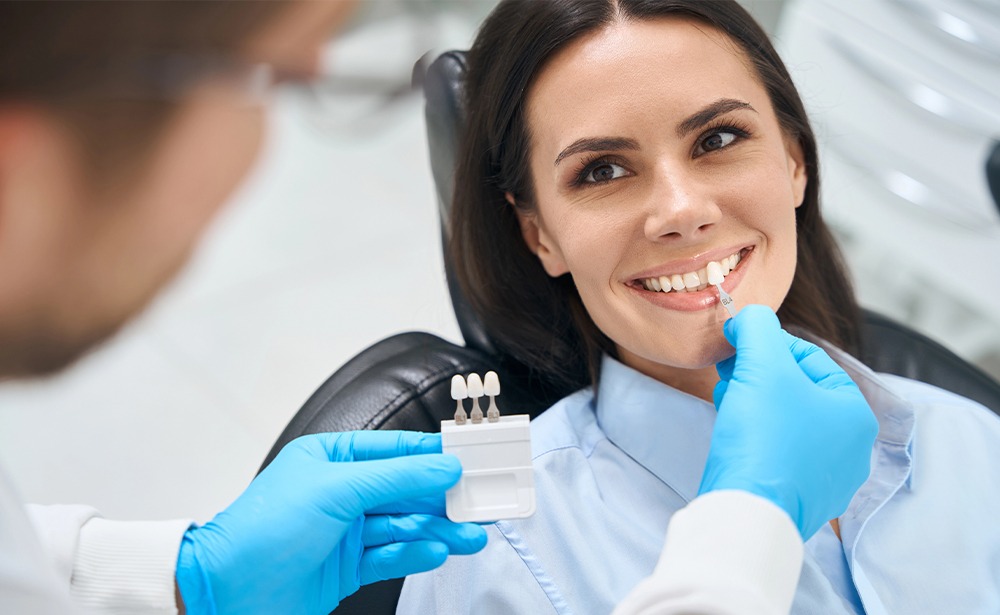
When it comes to dental aesthetics and restorative dentistry, different veneer options may be considered. Veneer treatments may be planned due to fractures, wear, discoloration, or aesthetic expectations. At this point, one of the most frequently asked questions by patients is the difference between zirconium veneers and porcelain veneers.
Both types of veneers are restorative procedures aimed at supporting the function and aesthetic appearance of teeth. However, there may be some differences in terms of the material used, aesthetic properties, and treatment planning. In this article, you can find an informative overview of the main differences between zirconium and porcelain veneers.
What are dental veneers?
Dental veneers are a restorative treatment method applied to teeth that have been damaged for various reasons or that require aesthetic adjustment. Veneers aim to provide both functional and aesthetic support by covering the outer surface of the tooth.
Veneer treatments may be planned for situations such as repairing broken teeth, preserving worn tooth surfaces, correcting tooth discoloration, or reshaping tooth form.
The materials used in dental veneers can vary. Zirconium veneers and porcelain veneers are among the frequently considered options for these treatments.
What is Zirconium Coating?
Zirconium crowns are a type of dental crown that has a zirconium substructure. Zirconium is among the ceramic materials used in dentistry due to its durability and biocompatibility.
Developed as an alternative to metal-supported crowns, zirconium crowns can offer aesthetic results close to the appearance of natural teeth thanks to their light transmittance. Therefore, they are one of the preferred applications, especially in treatment plans where high aesthetic expectations are required.
Zirconium crowns can be designed for use on both front and back teeth.
What is porcelain veneer?
The term porcelain veneers refers to a type of veneer that has been used in dentistry for many years. In traditional porcelain veneers, porcelain material is usually applied to a metal-supported substructure.
The metal substructure aims to provide durability to the veneer, while the porcelain surface offers a structure that enhances the aesthetic appearance of the tooth.
Although these veneers have been a functionally used treatment method for many years, in some cases the metal substructure can create aesthetic limitations. In particular, the darkening of the gum line over time can be an aesthetically undesirable situation for some patients.
Key Differences Between Zirconium and Porcelain Veneers
The differences between zirconium and porcelain veneers are generally evaluated based on the materials used and their aesthetic properties.
Zirconium crowns do not contain a metal substructure. Instead, zirconium material is used. This can contribute to a more natural appearance by increasing the light transmittance of the crown.
Porcelain veneers often have a metal-supported structure. While this infrastructure provides durability, it can sometimes lead to a limited aesthetic appearance.
Zirconium crowns are more frequently preferred in aesthetic treatment plans due to their compatibility with gum tissue. Zirconium crown options can be considered, especially when aiming for a natural appearance in the front teeth.
Porcelain veneers are among the treatments that have been used for many years and offer successful functional results.
Aesthetic Evaluation
In aesthetic dentistry, achieving results that closely resemble the appearance of natural teeth is a crucial criterion. Zirconium veneers, thanks to their light transmittance, can offer an aesthetic similar to natural tooth enamel.
This feature can be advantageous, especially in treatment plans where smile aesthetics are a priority.
Porcelain veneers can also offer aesthetically pleasing results. However, the metal substructure may, in some cases, limit light transmission, resulting in a different aesthetic appearance.
Therefore, in cases where aesthetic expectations are high, different veneer options may be considered by the dentist.
Durability and Usability Characteristics
Both zirconium and porcelain veneers are restorative treatments used to support daily chewing function.
Zirconium is a type of ceramic known for its durability. Therefore, it can be used as a veneer option for both front and back teeth.
Metal-supported porcelain veneers have also been among the preferred treatments for durability for many years. They can be planned especially to meet functional needs in the posterior tooth areas.
When choosing a treatment, the patient's dental structure, aesthetic expectations, and oral condition are all evaluated together.
Which type of coating should be preferred?
The choice between zirconium or porcelain veneers depends on the patient's oral structure and treatment needs. Both treatment options may be considered in different situations.
A clinical examination by a dentist will determine the appropriate treatment plan, taking into account the condition of the teeth and aesthetic expectations.
Zirconium veneers can be considered, especially in cases where aesthetic expectations are a primary concern, while porcelain veneers may also be preferred in some situations.
In cities like Eskişehir, where oral and dental health services are well-developed, detailed assessments allow patients to learn about the most suitable veneer treatment for them.
Frequently Asked Questions
What is the most important difference between zirconium crowns and porcelain crowns?
The most fundamental difference lies in the substructure material used. Zirconium crowns do not have a metal substructure, while porcelain crowns often have a metal-supported structure.
Is zirconium coating more aesthetically pleasing?
Zirconium material can offer an aesthetic closer to the appearance of natural teeth thanks to its light transmittance.
Are porcelain veneers durable?
Metal-supported porcelain veneers have been among the durable restorative treatments used for many years.
Which type of coating is more durable?
The lifespan of veneers can vary depending on several factors, including oral hygiene, teeth grinding habits, and regular check-ups.
Is veneer treatment suitable for everyone?
The suitability of veneer treatments is evaluated by a dentist through a clinical examination.

Kırmızı Toprak Mah. Vali Ali Fuat Güven Cad. No:26 Odunpazarı/Eskişehir
Haritada GösterWeekdays 09.00-20.00
Saturday 09.00-18.30
Sunday Kapalı